I’ve long said that I do believe game testing is one of the best ways that testers can improve their skills. Yet there’s very little out there that’s substantive about game testing, particularly in terms of how testers are asked to think beyond just “test that the game works.” So let’s dig in to this a bit with a two part series that involves something even a lot of game testers seem unaware of, which is the concept of ludonarrative.
I’ve tried to redress the balance of game testing material here and there. I talked about my Quest for Test game that I wrote for something to use in interviews, which you can actually play online if you want.
I also talked about how attention to detail is crucial with exploratory testing in this context. That post dealt with Star Wars: The Old Republic (SWTOR) and I referenced a few of my other posts on this topic there as well. I also talked previously about testing game performance and user experience related to configurations in testing at the horizons of quality where I used the game Horizon: Zero Dawn.
In this post, I’ll approach ludonarrative as a concept a bit obliquely and show some examples of where and how testers attempt to look for this. This will be setup for the second post for a deeper dive into the concept and why it’s challenging from a test and design perspective.
Before I get too much into ludonarrative as a concept, let’s just jump right into some game testing right away. Certainly this will show aspects that testers must be on the watch for. However, this first example will be questionable in terms of whether it constitutes ludonarrative and I’m purposely not defining that term for you yet so that we can just explore ideas without too many preconceived notions. I also want to bring up here one of the key qualities we provide to users, which is trust.
Elden Ring
Here I’ll focus on FromSoftware’s game Elden Ring, which is a spiritual successor to its famous Dark Souls series of games as well as Bloodborne. Unlike those games, Elden Ring takes the core mechanics and concepts, not to mention the narrative structure, and places all of it in what’s called an “open world” context.
A Lived-In World
What I’m going to talk about initially is actually very similar to the situation I described in the aforementioned post regarding SWTOR and certainly factors into both utilizing a tester’s attention to detail but also focusing on exploratory aspects.
To give some context, you start the game in an underground section called the Stranded Graveyard. And as you go through that area, you will — if you are paying attention — notice that apparently there are breaks in the ceiling, letting light from the outside spill in. This visual is a heuristic for testers to immediately start trying to find those areas when they get above ground.
So let’s consider a few of the points where you’ll see these holes. Also, I should note for many images in this post, if you see the little framing element around them, click the image for a much larger view.
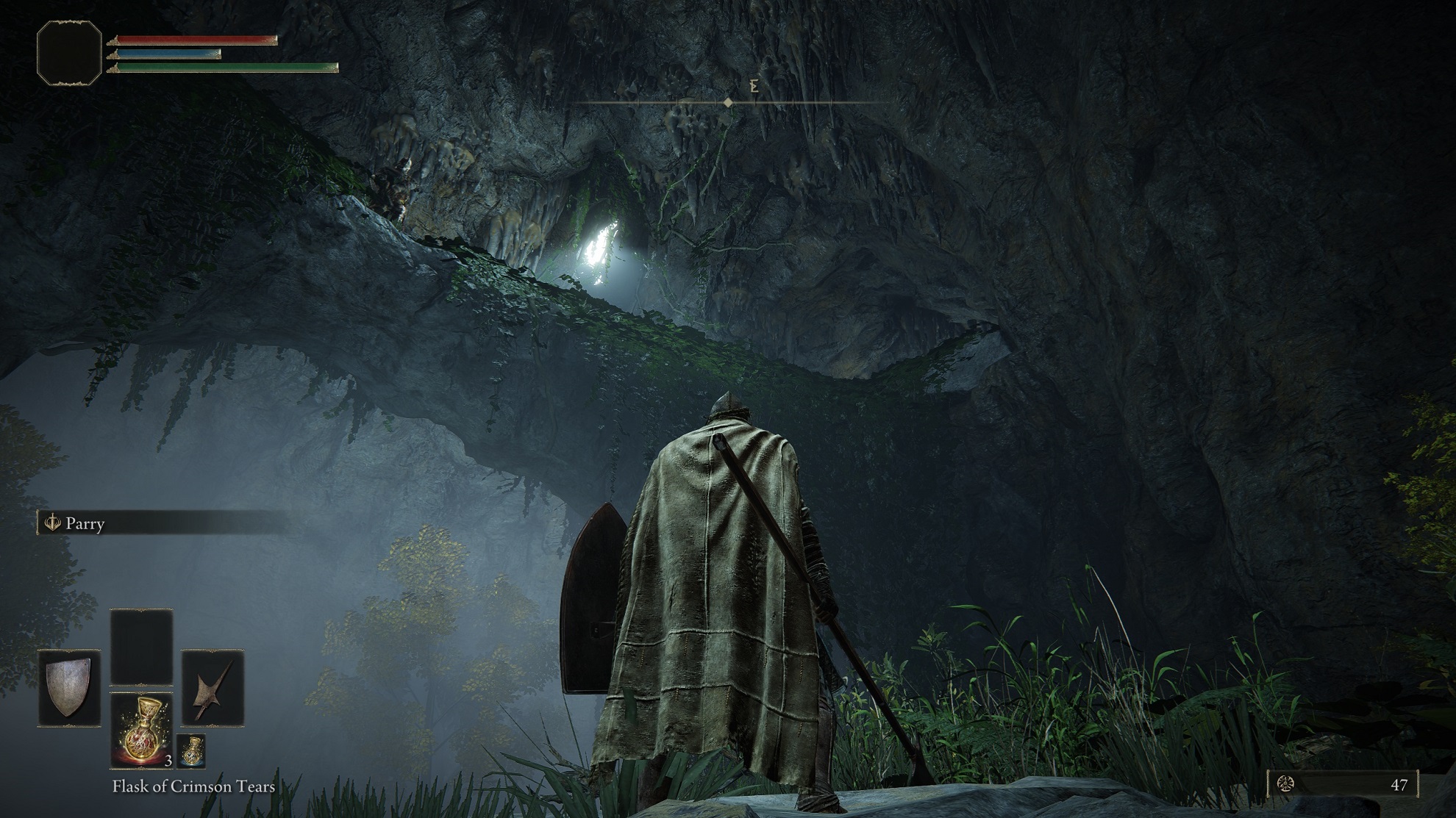
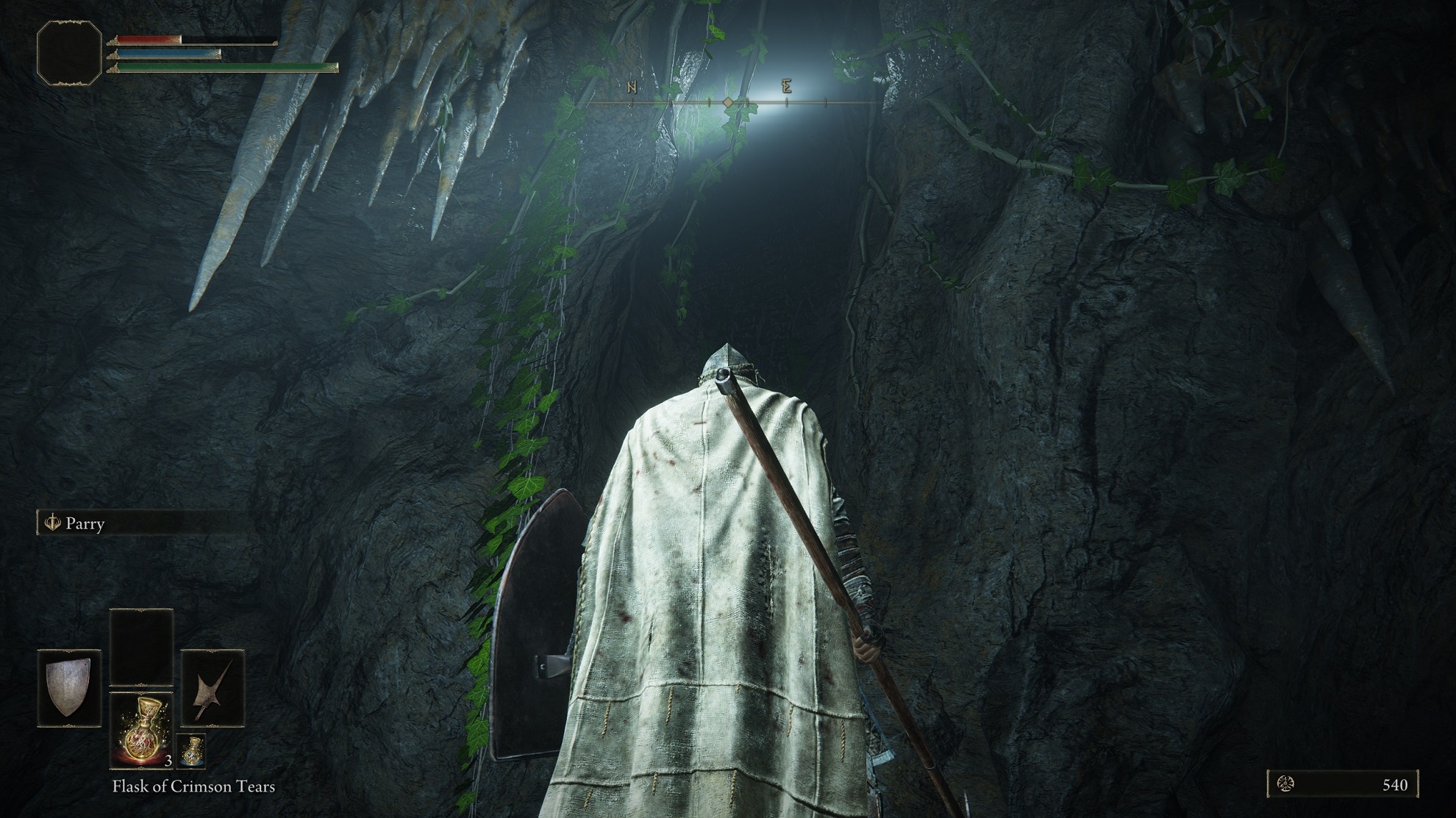
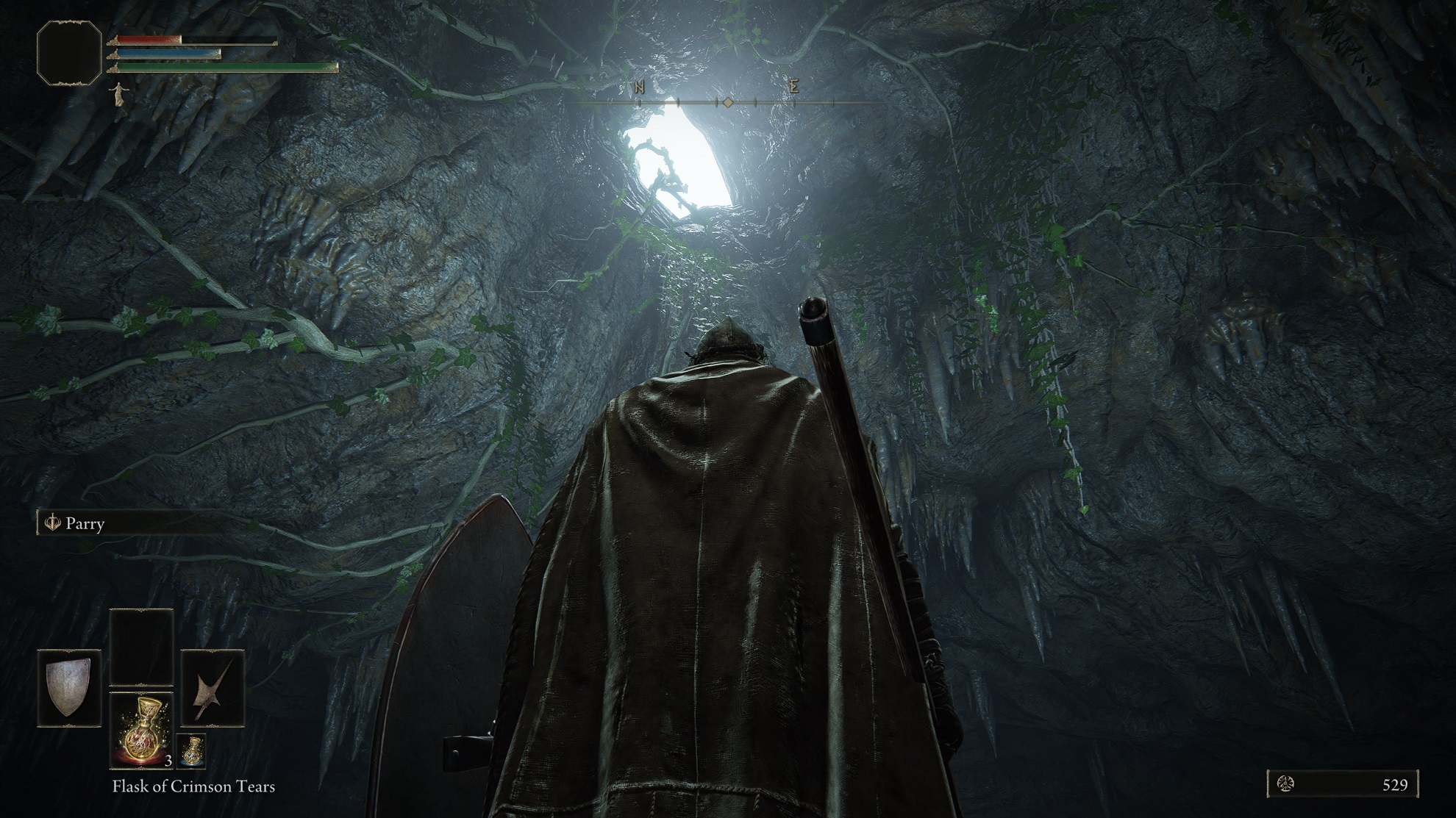
As I was testing this, I made marker points on the map to indicate where I was.
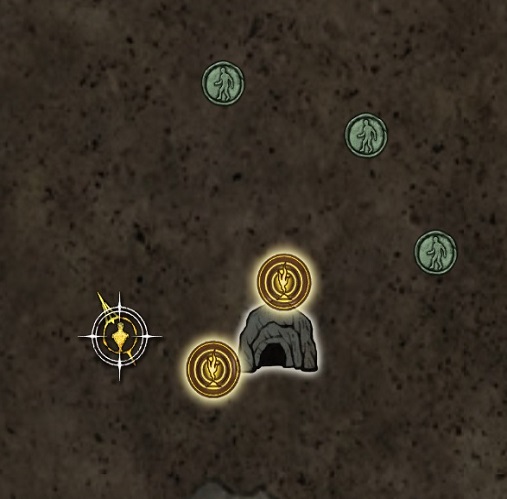
Each of those green markers shows where my character was underground when they encountered some hole in the ceiling. Incidentally, normally the map is filled in with detail but I’m keeping it opaque to make it easier to see where the character is.
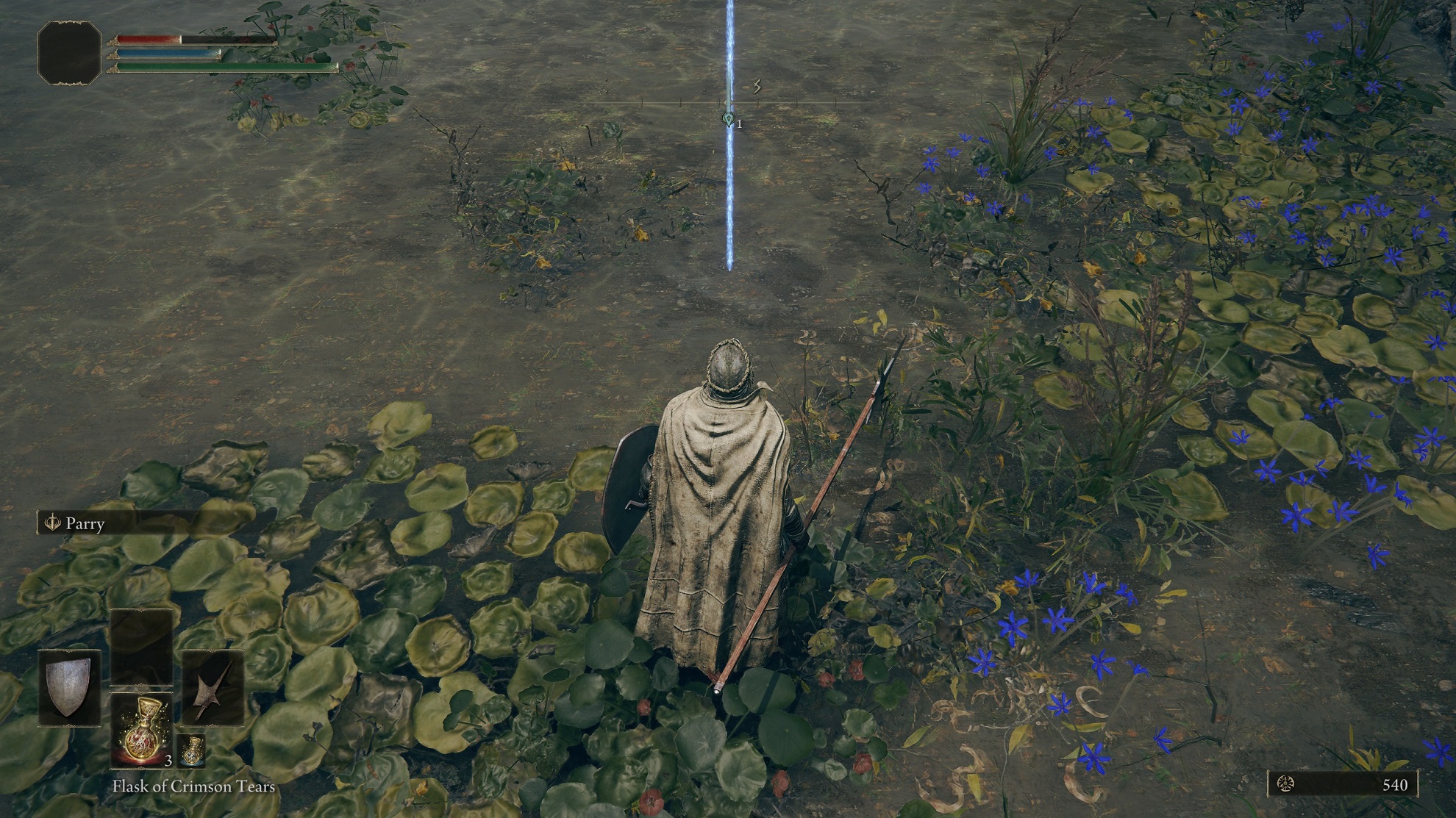
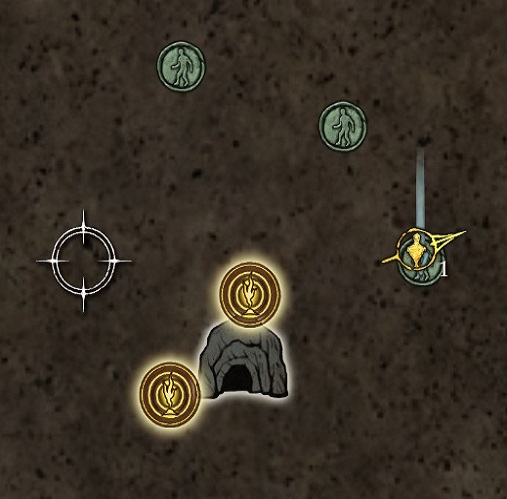
Eventually you do get outside. What I then did was put some beacons on the locations top side that corresponded to my markers and went to those locations. Here you can see that I’m in the correct position by looking at the map:
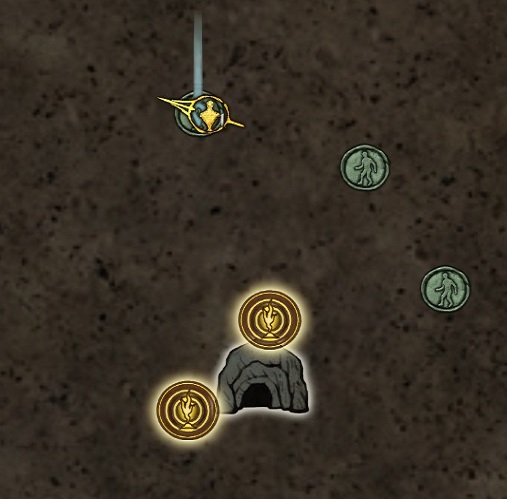
The little blue line there is how I set a beacon point to make sure I end up on the right spot. Thus I’m right on the spot aboveground that I was at underground. Thus I should presumably see a hole here. Well …
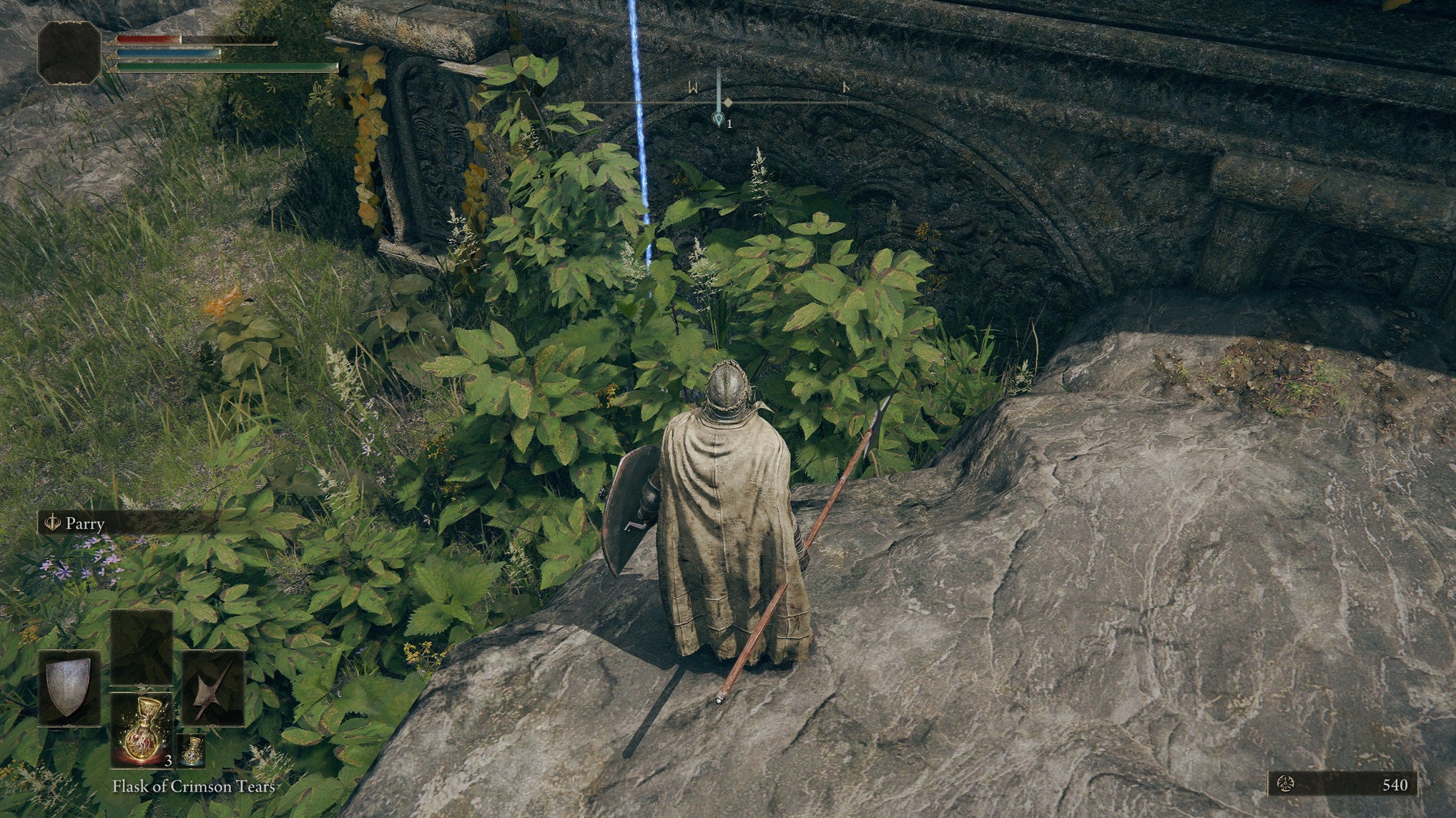
Nope. You can see the little blue line that’s marking my beacon and while you might think the bushes and leaves might be covering up a hole, I assure you: there isn’t one there.
Let’s try the others.
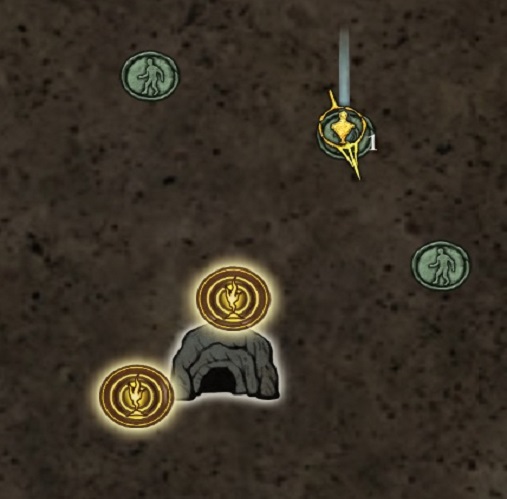
Nope again. No hole. And this time, very clearly no hole. Okay, last chance for the final location.

And again, nothing. Speaking not only as a tester, but also as a gamer, that is an embarrassing lack of consistency for a company that has prided itself on its environments that are geographically consistent and interconnected.
Yeah … but … so what?
It’s definitely worth asking a key question: does any of this matter?
From a pure gameplay perspective, no. From a ludonarrative aspect, yes. Or, at least, potentially yes. It means the world really isn’t consistent with what it presents to you — at least in this early example. Thus is my trust in the game diminished, even if ever so slightly. I now realize the game world may not necessarily be showing me details accurately or consistently. Does that matter yet? This early in the game, I have no idea. But the thought is now inevitably in the back of my mind. As a caveat here, I will say that in many other ways the world of Elden Ring is extremely well laid out. But architectonic and geologic aspects do go a long way towards providing a consistent view of a game world and thus, in their own way, provide a form of ludonarrative: a story about the world you are engaging with via gameplay.
In a word, verisimilitude in geography or in constructs is part of how players learn to trust a game and the world that’s being presented to them, especially in a game like this where the nature of the world itself is part of the story and is almost a “character” in its own right. And here’s the ironic thing. There actually is a hole in the ground very close to this area! Check it out:
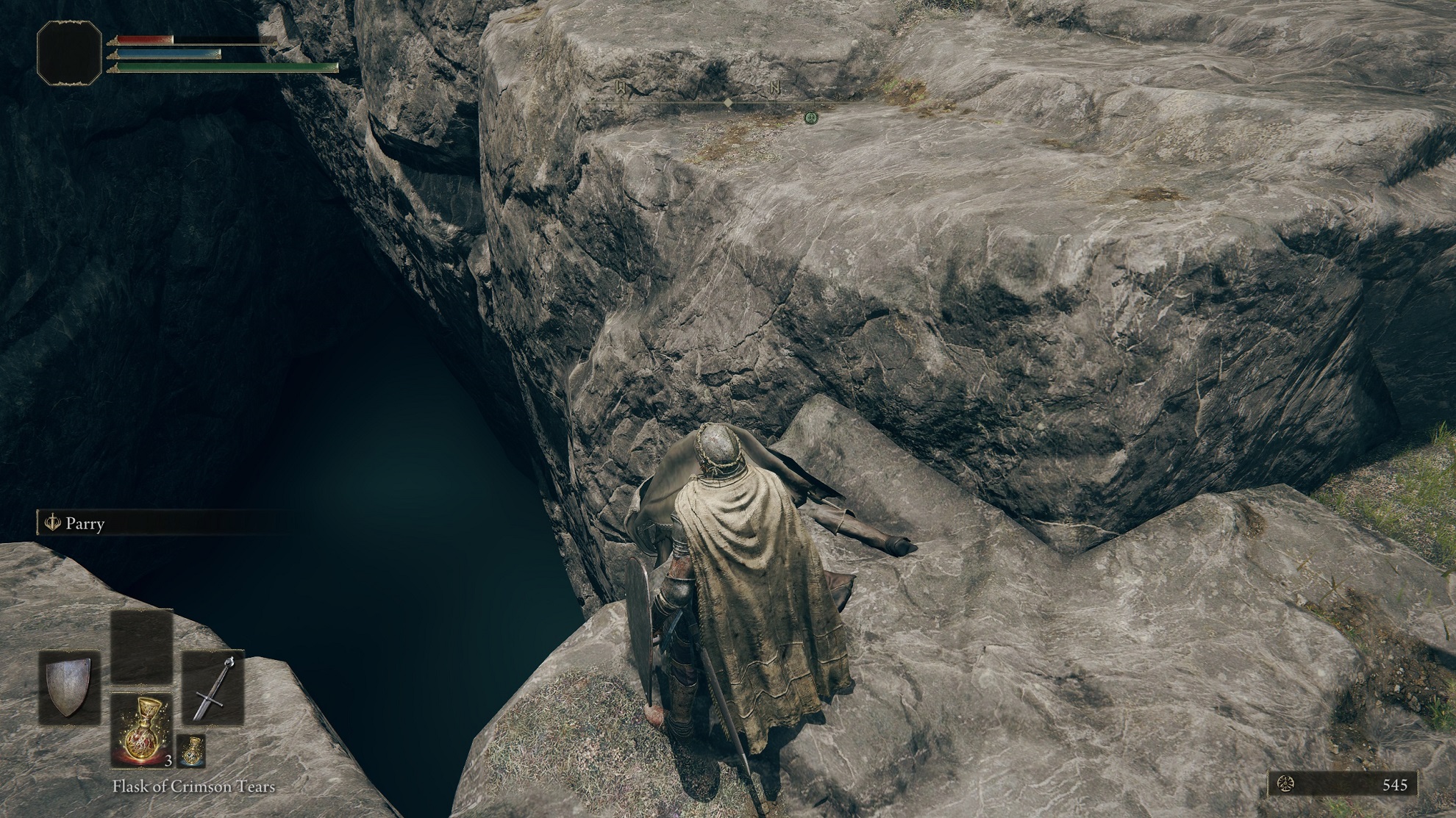
Here’s where that location appears on the map:
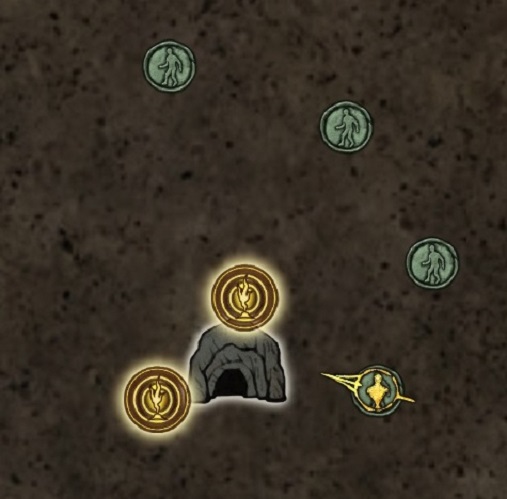
But that leads to nowhere and does not reflect any spot within the Stranded Graveyard where you can see a hole from below ground.
By the way, another interesting thought should occur to a tester who plays the game. Specifically, the game provides a day/night cycle. When the player starts the game, it’s always considered “early day” and thus the holes you see in the roof show a lot of light streaming in. But I wondered: what does it look like down there at night? Well:
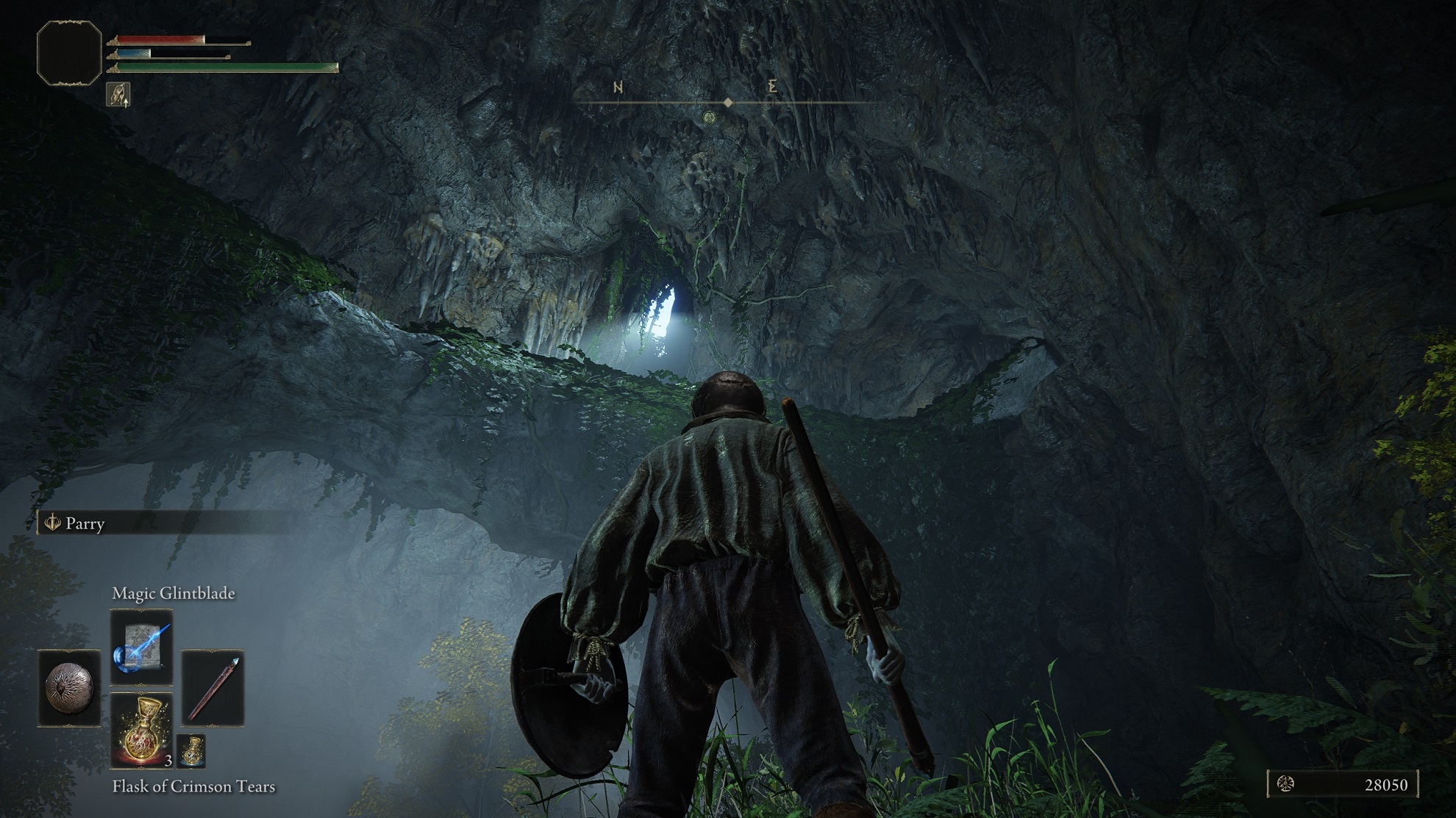
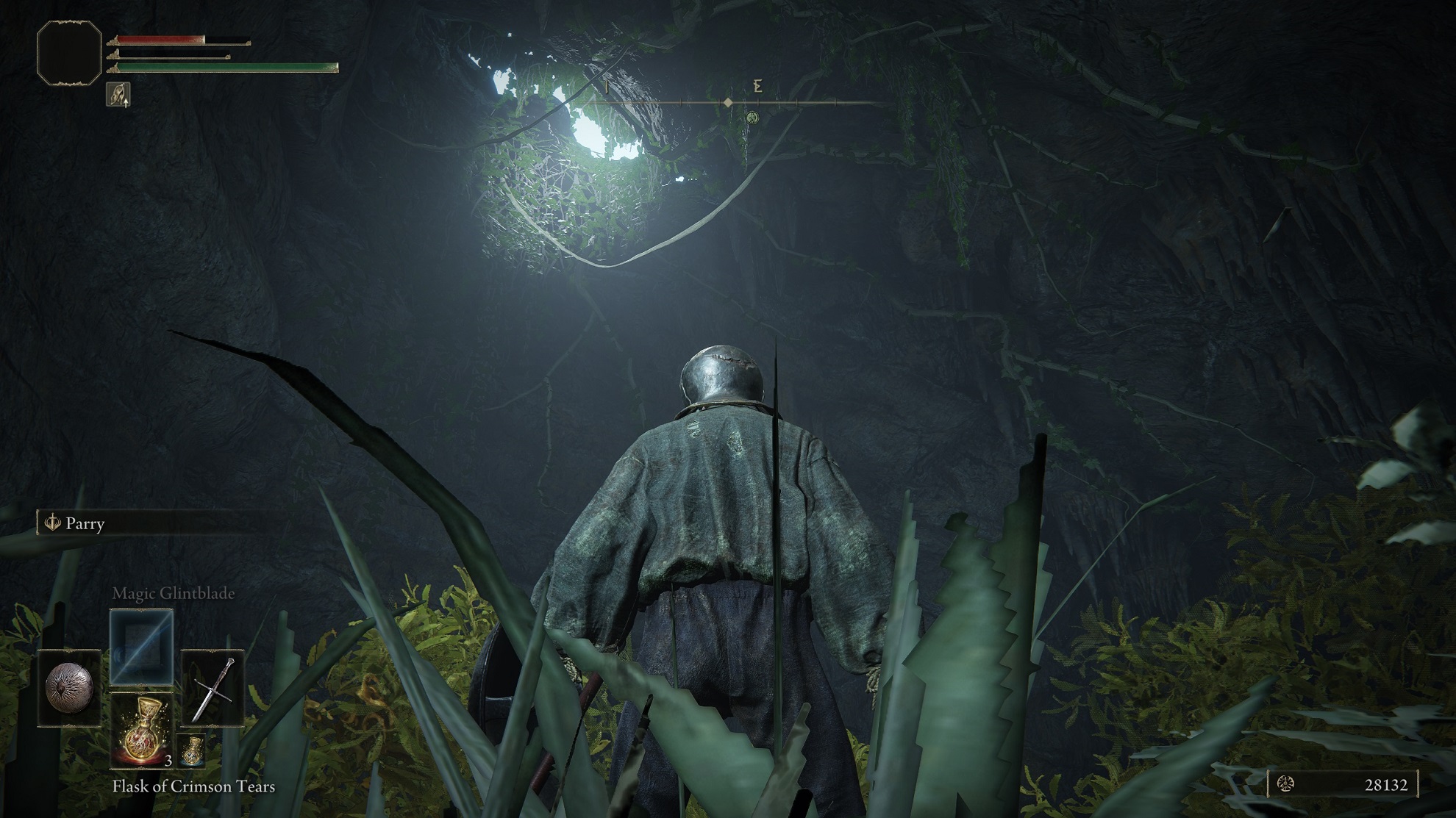
Not a change at all. Again, perhaps a small thing. But this would be an example of what I talked about regarding “bumping the lamp”.
This is what testers who are focusing on attention to detail in games are looking for. And this, I should note, is very low-hanging fruit compared to how much there is to find in such a game. Beyond testers, however, many game players are getting quite a bit more sophisticated in terms of what they expect. For games that engage them, players often want to explore the game in a great amount of detail, often noticing inconsistencies that can slightly diminish the experience, even if only subconsciously.
What does this have to do with ludonarrative, however? And what actually is ludonarrative anyway? Well, bear with me. Let’s consider another example from the same game.
A Living Lived-In World
A key element of these games is that the player can find non-player characters (NPCs) and interact with them. This drives some sort of story progression unique to that character and serve as a form of questline. Games of this sort rely on triggers that determine what activities have taken place and in what context. This is what gates when and how questlines proceed.
FromSoftware’s engine is notoriously bad for triggering events. Consider the open world versions of Assassin’s Creed (either Origins, Odyssey, or Valhalla) where triggers are set upon an NPC event happening. Meaning, you talk to some NPC and that furthers their questline because the NPC interaction acts as the trigger. FromSoftware’s engine doesn’t do that. It tends to requires a world reset. For context, in FromSoftware’s games one of the conceits is that if your character dies, they respwan at some point in the world that they have visited. In Elden Ring, these points are called “Sites of Grace.” This death causes a world reset where all enemies that you previously defeated are now revived.
Making this slightly more complicated, in Elden Ring these resets are what I refer to as “global” world resets or “local” world resets.
One example of this being problematic is a character named Renna.
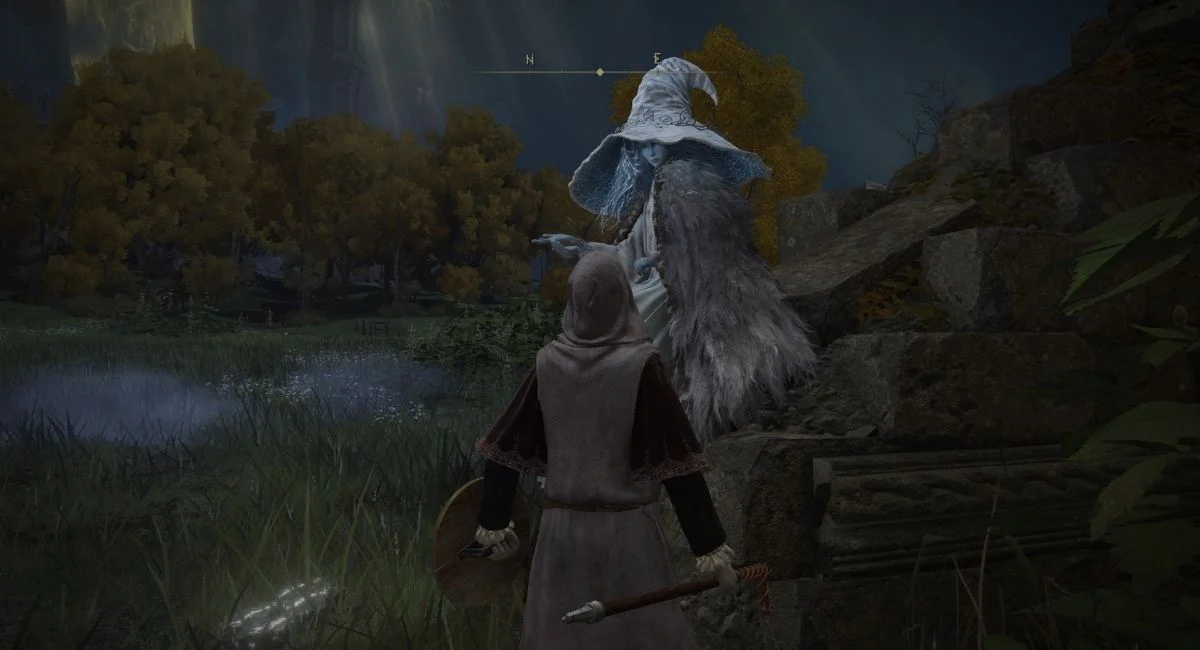
Ideally, especially for new players, you encounter her early on in the game. She will hand you this thing called a Spirit Calling Bell. This is not a crucial tool for game progression but it certainly is one that will allow newcomers to progress in the game a little more easily because it gives you the ability to summon companions that help you in battles. So far so good.
Renna is supposed to appear at a place called the Church of Elleh. This is a place you visit extremely early in the game; practically right at the start. In order for Renna to appear, you have to talk to another NPC named Melina who will give you a spirit horse. This conversation with Melina plus the player being given the horse in the first place is what should trigger Renna to appear. Renna specifically mentions this, in fact:
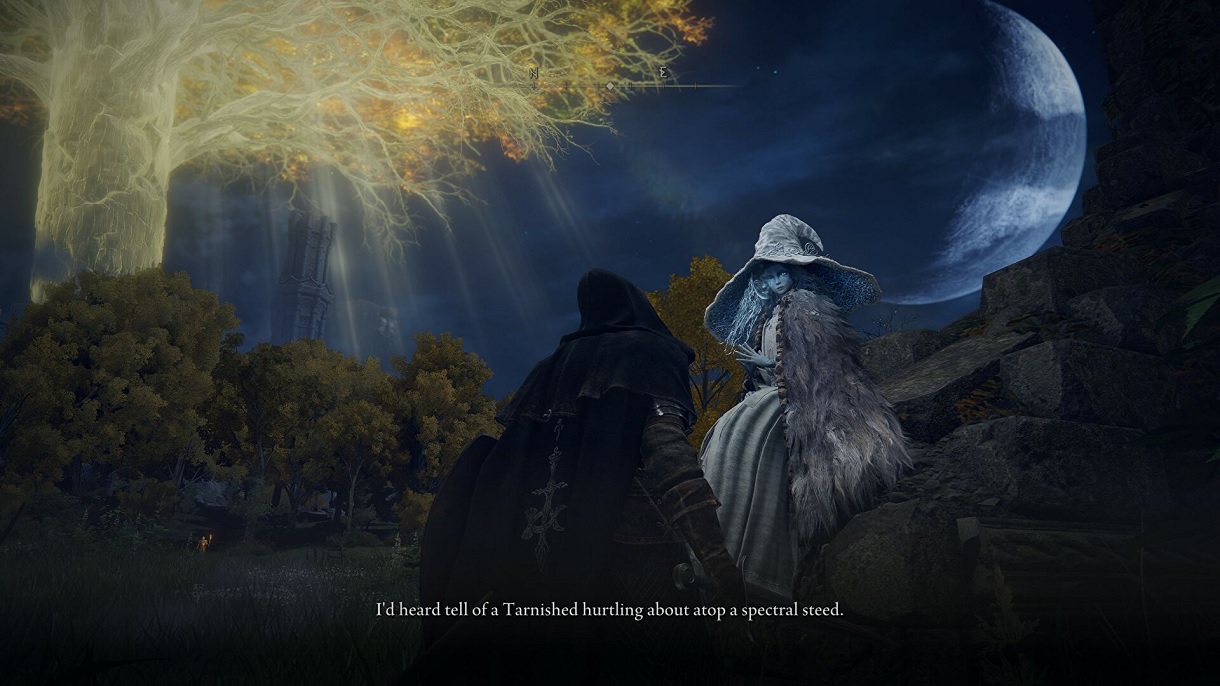
There’s only a slight problem: the player is supposed to figure this out from no clues at all.
In fact, it would be quite possible to not go back to the Church of Elleh at all. You can see a rough map of the relevant area here.
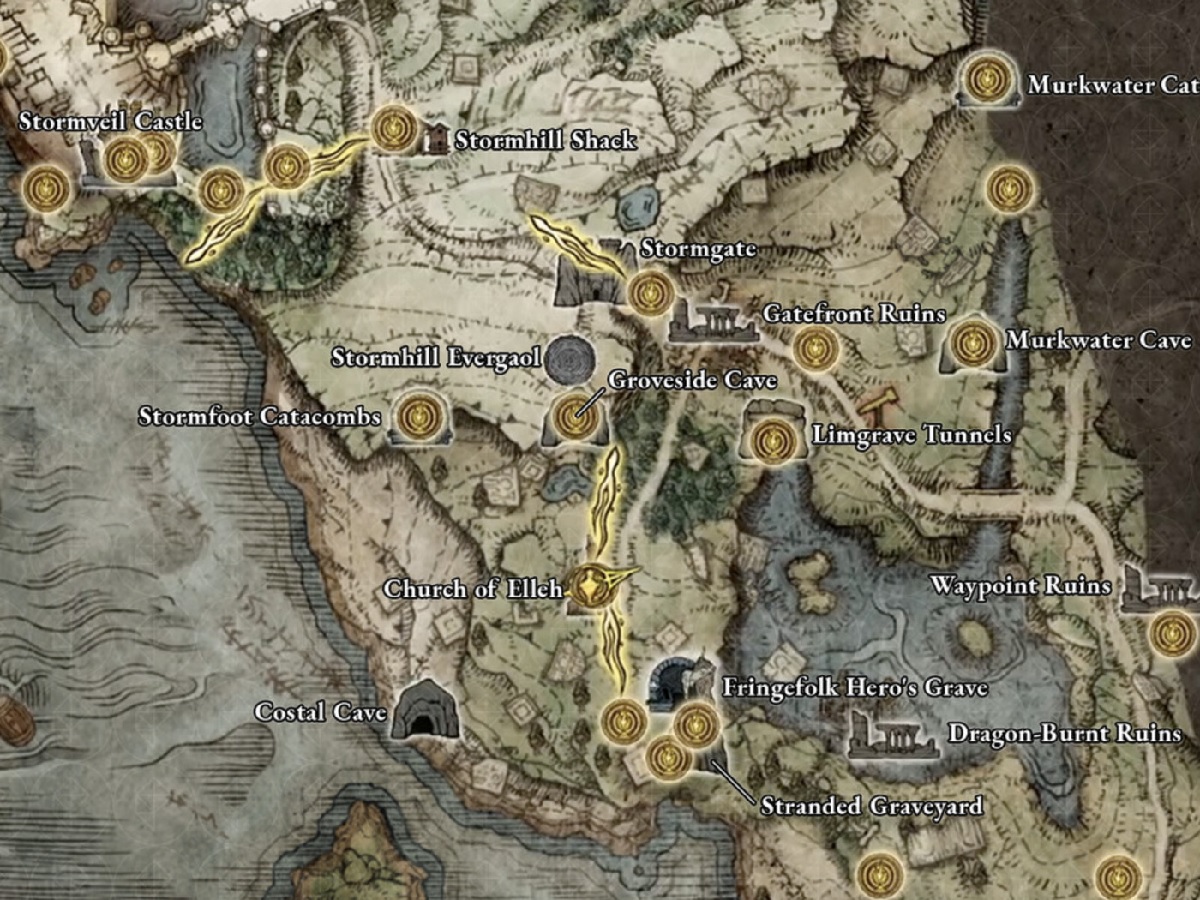
Each of those little yellow circle are the Sites of Grace I mentioned. The player is supposed to visit these and activate them. These provide resting points for the player and, crucially for my point here, also serve as “fast travel” points that you can instantly go back to.
Looking at the map, the player starts in the Stranded Graveyard, goes to the Church of Elleh, and then usually gets the horse from Melina at the Gatefront Ruins. That said, getting the horse from Melina actually occurs on the third Site of Grace you happen to rest at. So it can technically take place in other areas, particularly if you happen to be exploring. This means a player might find themselves with very little reason to go back to the Church of Elleh at all.
Okay, so the player is given no clue to head back to the Church, but perhaps players should just be counted on to explore a bit, right? Eventually they’re bound to run into Renna at the Church. Aren’t they? Well, another slight problem: Renna only appears at night.
Okay, fine, so the player has to figure out to go back to this Church and only at night.
Well, there’s another problem: the player must actually teleport (fast travel) specifically to the Church and specifically at night to have a chance of seeing Renna.
Bug or Feature?
As a tester, this is a quality-of-life bug. This isn’t a case of the player tracking down Renna. She literally won’t appear if you don’t teleport — and only teleport — to the Church of Elleh — and only the Church of Elleh — at night — and only at night. And keep in mind: a first-time player is not even aware that there is a person called Renna who might want to speak to them. Thus a player who stumbles upon her in one of their playthroughs might be asking: did I miss something in terms of Renna? Did Melina maybe mention something about her? Did I miss a clue to go back to that specific church at night? Or to teleport? Or, since you must, to teleport only at night?
The answer is: no, the player didn’t miss anything. The game tells you none of that.
FromSoftware’s games are notoriously said to be challenging and it’s quite possible that the above was entirely intended as a mechanic for the player to figure out.
Yet, there is a lack of ludonarrative consistency here. The game immediately, and very clearly, wants to challenge you by having you explore the world. You walk around (or ride your horse around) finding little details, encountering characters, and so on. The teleporting or “fast travel” bit is actually a way of subverting exploration. And as a quality-of-life game mechanic, it’s great! It can save players having to traverse wide swathes of territory just to get to where they want to go. But what happens when you use an optional game mechanic, that subverts the game’s clear predilection for exploring, as a means to gate quests?
Yeah, that’s a quality problem.
Renna thus isn’t a “game challenge” because if I’m exploring — which I am with my trusty horse all over the place — there’s no reason for me to teleport (specifically teleport) to the Church of Elleh at night. Going there at night and having Renna show up? Yeah, that would just be exploration, albeit very unclued. But that doesn’t work. You must teleport and you must teleport only to that grace point and do so only at night.
Learning why it is, in fact, a bug tell us something about why such a bug happens in this context.
As a tester, going back through the patch notes it’s clear some of the issue may have been introduced with patch 1.02.1, as part of the fix titled “Reduced number of files needed to load when entering a new area.” This was part of a continuing bug introduced in patch 1.02, specifically the fix titled “fixes to NPC events.”
But … wait, why does reduction in files being loaded potentially have anything to do with this? Well, the key thing is “entering a new area.” Keep in mind: this is an open world game. So you can travel all over it and there really aren’t load screens between the areas. But when you die and respawn at a Site of Grace or when you teleport to a Site of Grace, the area is loaded.
The idea is that Renna is supposed to have her trigger set when the player talks to Melina and gets the horse. Since that happens as part of a Site of Grace conversation, the trigger should be set as part of that world reset. That’s actually why this key NPC conversation takes place when you rest at the Site of Grace. The bug, apparently, is that Renna’s trigger is being set before the part of the interaction that triggers the world reset so, effectively, the trigger isn’t applied to the world.
Because of this, the trigger is now “locked” to the Church of Elleh alone. Which is why only teleporting to the Church works. Teleporting specifically to the Church of Elleh, which happens as part of a world reset, also triggers the local reset of area around the Church of Elleh, including loading any relevant files related to updates to that area. I should note, crucially, that teleporting somewhere else, such as to another nearby Site of Grace, and then going to the Church does not work.
Interestingly, there is a “boss enemy” near the Church of Elleh called the Tree Sentinel.
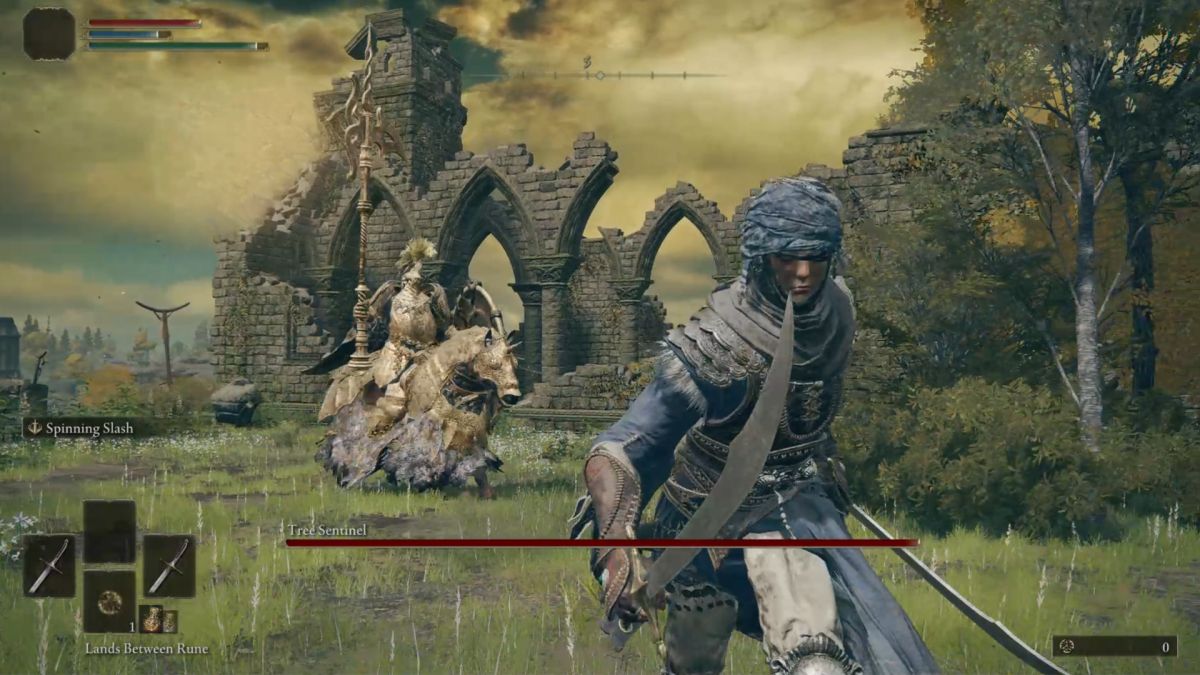
Incidentally, running away from this guy when you first encounter him, as shown above, is probably a very good idea. Or maybe not. You see, as it turns out, dying to the Tree Sentinel forces that immediate area to have its triggers recalibrated and when that happens, that will also often trigger Renna to appear — well, if you happen to have rested at the Church of Elleh’s Site of Grace before dying to the Tree Sentinel.
What you end up with here, just like the geography aspect I mentioned above, is a potential trust issue. The player is now left wondering how they were supposed to know this. Most players, by the way, figure out about Renna because they read about her on one of the game’s Wiki sites or on Reddit threads. So, as a player, I’m now wondering: how much else is totally unclued? Should I just be teleporting to various places, at both day and night, and then wander around and see if things changed? How often do I have to do this?
Looking at this from the standpoint of a tester — and I would argue as just a game player — even if this is intended, it’s clearly poor design. But it’s not so much intended as it is a result of the game engine that’s being used, which requires these resets to cause triggers to fire. Which brings us to another area to consider and one that makes testing very tricky with this game.
A World of Quests
In general, players tend to admit that FromSoftware has been very bad at quest design in all of their other games. However, that’s usually speaking to the quests being entirely opaque as opposed to being impossible to follow. The reason for this is that, in previous games like the Dark Souls series, the paths through the game areas were mostly linear. So it was fairly difficult not to run into various NPCs and thus at least have the chance of triggering their questlines.
But Elden Ring, remember, is open world. So you can encounter things out of order or not have certain things trigger simply because you never ran into the character or didn’t run into them soon enough or in the right order relative to other characters. A good case in point goes back to Renna above: eventually it is possible to do things in the world where she won’t appear at all at the Church of Elleh. This isn’t game-breaking because the items she would have given you can eventually be obtained other ways. But, in some cases, missing out on key interactions will nullify a questline entirely.
There’s a community-driven list of side quests in the game. None of that, by the way, is official. That’s written by fans who are trying to understand how the quest system works. And, to be sure, there is a quality here: fans of the game are working together to determine what can be figured out about how the game works. And if you have massive numbers of hours to devote to a game, that can be a lot of fun. That said, even with all this work, what players often end up with is something like this:
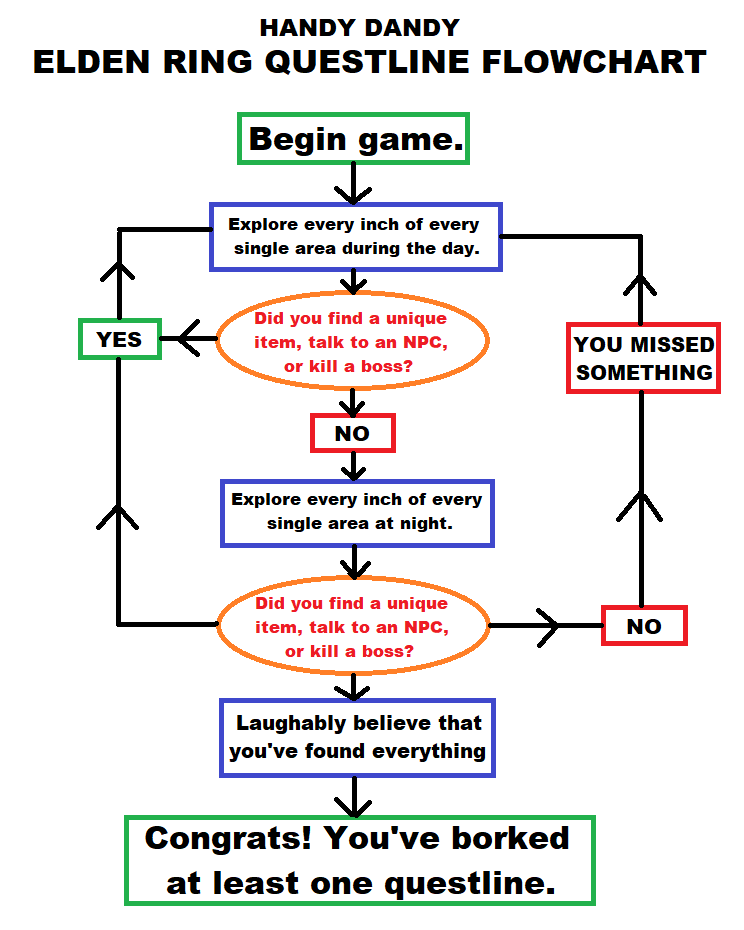
But, in reality, here’s an example of what you have to generate. Fair warning: that’s about a 7 MB image! That’s a visual-based model for testing purposes to go through the questlines. And even that’s really the cliff-notes version. In order to track this kind of stuff, what you really need is the equivalent of a test guide for how you are going to handle testing all of these quest lines. Here’s an example of an Elden Ring Quest Test Strategy.
Competing Qualities
On the one hand, this confusion around questlines aids a certain quality: replayability. To figure all of this out, as a player — and assuming you aren’t just reading someone else’s guide of how to do quests — you have to do a series of replays of the game. There is, quite literally, no way someone would happen to stumble upon all of the correct triggers in the correct way in an open world game like this.
On the other hand, for a game with no save system and for a game that can easily take dozens if not hundreds of hours and for a game where encounters can be gated or locked out based on unknown conditions, some of which are due to engine mechanics, rather than game dynamics … well, let’s just say this is, or at least can be, a blight on what is otherwise (I would argue) a fantastic game and a huge evolution in the Dark Souls style games.
We’re Back to Ludonarrative
What we end up with here is another aspect of ludonarrative issues: the potential problems with telling a cohesive narrative in the context of gameplay. And a cohesive narrative in the context of gameplay is what ludonarrative is all about. And for that I’ll have to ask you to wait for the second post in this series. I’ll talk about ludonarrative very specifically, use a few games to showcase what this means in context, and then we’ll return to Elden Ring for a bit.
What I hope readers see is that, in this post, I focused on some of the objective aspects of quality — even though, note, we can still disagree about how much or to what extent those objective aspects are degraders of quality. In the second post, I’ll talk more about the subjective aspects of quality. As you can imagine, there can be even more disagreement in that context!
So … stay tuned! And, in the meantime, I encourage you to “cross the fog, to the Lands Between, to stand before the Elden Ring.”
