In the first part of this series, I examined how Hollywood’s financial model (commit hundreds of millions upfront, spend it all before release, then discover whether audiences agree with your projections) creates a high-stakes gamble on predicting quality. Studios bet enormous sums on forecasting how diverse audiences will perceive value years in the future, often with not-so-great results. The gaming industry faces a strikingly similar challenge, but with crucial differences that make the quality prediction problem even more complex.
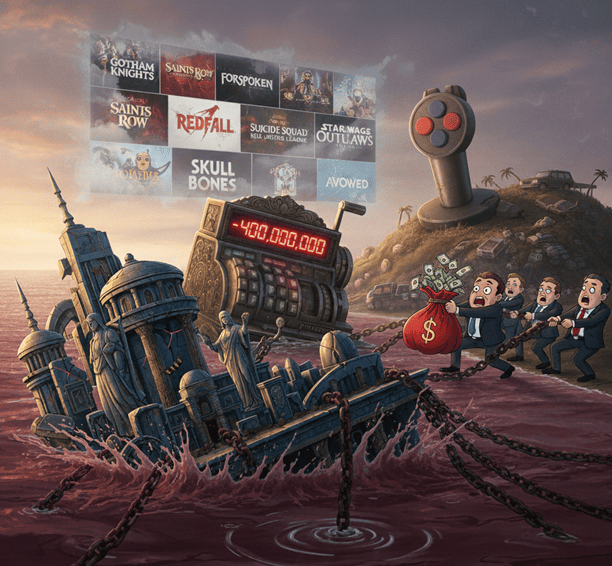
Games aren’t just watched passively; they’re played, which means quality includes technical performance, mechanical depth, player agency, and evolving live-service expectations. Production timelines can stretch even longer than films (five to seven years for so-called AAA titles), cultural trends shift faster, and player communities wield unprecedented influence through social media, streaming, and review bombing.
If Hollywood’s model is precarious, gaming operates on a knife’s edge: where a single misjudgment about what players will value can sink not just a game, but an entire studio.
Greenlighting Potential Quality
The video game industry operates on virtually the same financial model as Hollywood, particularly for big-budget AAA titles from major publishers like Electronic Arts, Ubisoft, Activision Blizzard, Take-Two, Square Enix, Sony, and Microsoft.
Fun fact: the idea of “AAA” (triple-A) in this context was a term originally coined by game journalists to describe high-budget, high-profile titles, analogous to Hollywood blockbusters. This was later adopted by publishers as a marketing category. The term has no formal definition but generally implies production budgets of $50+ million, multi-year development cycles, and major publisher backing.
Games are greenlit only after publishers approve detailed profit-and-loss forecasts that include projected unit sales, price points, digital versus physical splits (something that is rapidly going away with all-digital releases), regional performance, DLC and microtransaction revenue, and live-service projections. Just like studios use “comps” to estimate a film’s potential, publishers model games using comparable titles. You might get something like this:
This is Call of Duty meets Elden Ring, so we project 70% of Black Ops 6‘s sales plus 50% of Elden Ring‘s market performance.
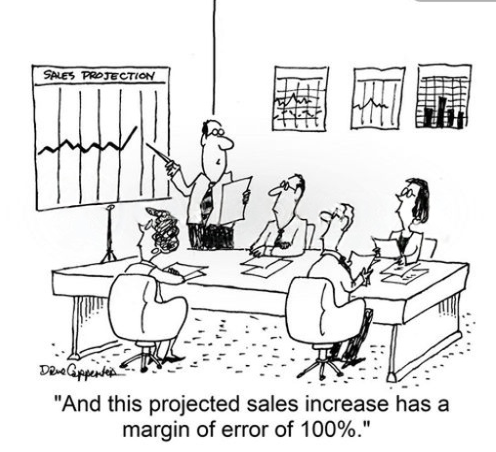
If the projected ROI hits the threshold (and that’s typically twenty to fifty percent profit margin depending on the publisher) the game receives full funding. And, just like Hollywood, the money is spent long before players ever see the game. By launch day, ninety to one hundred percent of the development budget is already committed. Development cycles now commonly span four to seven years, with AAA titles routinely costing around $200 million and up. Starfield reportedly cost around $400 million and Grand Theft Auto VI is rumored to exceed $1 to 2 billion when marketing is included.
This spending covers salaries for hundreds or thousands of developers working for years, engine licensing (Unreal Engine royalties, for example), music and voice talent, sports league partnerships, and marketing campaigns that begin at least twelve to twenty-four months before release. All of it paid upfront, all of it irrecoverable.
Launch day becomes the reckoning. Publishers pray that actual sales match or exceed pre-release forecasts. When they don’t, the losses can be catastrophic. Unlike Hollywood, where studios absorb write-downs but continue operating, gaming failures often trigger studio closures and mass layoffs. Recent years have seen studios shuttered entirely after single game failures: Volition (after Saints Row), Arkane Austin (after Redfall), Firewalk Studios (after Concord), Luminous Productions (after Forspoken), and Ascendant Studios (after Immortals of Aveum).
In each case, hundreds of developers lost their jobs not because they failed to execute technically, but because years-old projections about what players would value in the future proved disastrously wrong. The human cost of miscalculating quality goes far beyond balance sheets.
That being said, the gaming model does differ from Hollywood in a few key ways, though streaming is narrowing the gap. Digital distribution provides much higher margins after release: developers keep roughly seventy percent of revenue on Steam and PC platforms, compared to theatrical releases where theaters take approximately fifty percent of box office receipts. Streaming platforms (Netflix, Disney+, Max) operate more like digital game stores, keeping content in-house and avoiding theatrical splits, but they face their own challenge: subscription revenue is diffuse across entire catalogs, making it harder to attribute value to individual titles. A game selling two million copies on Steam generates clear, attributable revenue; a film watched by two million subscribers on Netflix generates engagement metrics and retention assumptions.
An added complication is that live-service games and microtransactions can extend the revenue tail dramatically: Fortnite, Genshin Impact, Roblox, and GTA Online generate ongoing income years after launch, which explains why publishers chase this model so aggressively. This mirrors how streaming platforms now treat their content as ongoing catalog value rather than discrete releases, but gaming’s direct monetization (skins, battle passes, DLC) creates clearer success/failure signals than streaming’s bundled subscription model. Indie and mid-tier games often operate on leaner budgets and sometimes release in Early Access to reduce risk. But for AAA titles, the pattern remains the same: spend everything upfront, then hold your breath on launch day.
Examples Galore!
The video game industry is littered with AAA titles greenlit on sky-high projections (leveraging proven IP, studio pedigrees, or “next big live-service” hype) only to crater at launch after years and hundreds of millions were already spent. I picked some standout examples from 2022–2025.
- Gotham Knights (2022, Warner Bros./WB Games Montréal). Following the acclaimed Arkham series, this co-op Batman game was projected to capitalize on DC’s most valuable IP with strong sales and live-service potential. Budget: ~$150 million. It sold approximately two million units lifetime. That’s a major disappointment given the Batman brand and marketing push. Mixed reviews citing repetitive gameplay and technical issues failed to sustain player interest. The game’s underperformance set a troubling precedent for WB’s superhero gaming ambitions.
- Saints Row (2022, Deep Silver/Volition). A franchise reboot designed to revive the beloved series with a fresh tone and new generation appeal. Volition had a strong track record, and the game was positioned to recapture the Saints Row fanbase while attracting new players. Budget: ~$100+ million (estimated). It launched to poor reviews and weak sales, with players criticizing the tonal shift (a so-called “woke backlash”), bugs, and uninspired gameplay. The failure directly led to Volition’s closure in 2023 after thirty years, marking one of the industry’s most tragic studio casualties.
- Forspoken (2023, Square Enix/Luminous Productions). From the team behind Final Fantasy XV, this was Square Enix’s bet on a new AAA IP: an open-world action RPG with next-gen visuals and parkour mechanics, projected to launch a new franchise. Budget: ~$100-150 million. It sold approximately three million units lifetime but failed to recoup costs or justify continued investment. Criticized for cringeworthy dialogue, empty open-world design, and lack of depth. Square Enix shuttered Luminous Productions shortly after, absorbing substantial losses.
- Redfall (2023, Microsoft/Arkane Austin). From the critically acclaimed studio behind Dishonored and Prey, Redfall was Microsoft’s answer to co-op live-service shooters, designed to bolster Xbox Game Pass with a premier multiplayer experience. Budget: Undisclosed but substantial given studio pedigree and marketing. It launched in disastrous technical condition with catastrophic reviews. Player count collapsed almost immediately. The failure became a massive embarrassment for Microsoft, culminating in Arkane Austin’s closure in 2024, ending one of gaming’s most respected studios.
- Immortals of Aveum (2023, EA/Ascendant Studios). EA’s bet on a new single-player magic-based FPS from veteran Call of Duty developers, projected to fill the AAA single-player action gap with innovative spellcasting combat. Budget: ~$125 million. It bombed completely at launch despite EA marketing support. Sales figures were never disclosed but were catastrophically low. Ascendant Studios laid off nearly half its staff shortly after release and effectively ceased operations. A total financial disaster.
- Suicide Squad: Kill the Justice League (2024, Warner Bros./Rocksteady Studios). From the legendary Arkham series creators, this was Warner Bros.’ live-service juggernaut, projected to blend Rocksteady’s single-player storytelling mastery with Destiny-style looter-shooter mechanics and recurring revenue. Budget: $200+ million. It sold fewer than one million units and performed a little over thirty percent worse than the already-disappointing Gotham Knights. Player base collapsed within weeks despite aggressive discounts. Estimated loss: $200 million revenue impairment, contributing to a roughly forty-five percent drop in WB’s gaming revenue. Repetitive missions, mismatched gunplay for beloved melee characters, and live-service inexperience sparked universal backlash.
- Skull & Bones (2024, Ubisoft). A decade-in-development pirate naval combat game, originally conceived as Assassin’s Creed IV: Black Flag‘s naval combat expanded into a full game with live-service elements. Projected to become a major franchise pillar. Budget: $650-850 million! That’s the longest and most expensive development cycle in gaming history. It sold approximately one million units and peaked at about 850,000 players (heavily inflated by free trials), now averaging maybe three hundred or so daily players on Steam. Estimated loss: Catastrophic. It failed to achieve any meaningful ROI given astronomical costs. Endless delays, repetitive gameplay loops, clunky combat, and a $70 price tag in a market expecting free-to-play naval games alienated audiences.
- Star Wars Outlaws (2024, Ubisoft/Massive Entertainment). The first-ever open-world Star Wars game, heavily marketed as a scoundrel’s adventure in the iconic universe. Ubisoft publicly stated the game needed three to four million sales to break even. Budget: ~$200 million. It sold about one to two million units lifetime; approximately one million in the first month before sharp decline. Estimated loss: Failed to break even. Ubisoft executives described it as a “disastrous underperformance.” Launch bugs, the stale-to-some Ubisoft open-world formula, weak AI, an unlikeable (or at least “too safe”) protagonist, and pervasive technical issues killed momentum despite the Star Wars license.
- Dragon Age: The Veilguard (2024, EA/BioWare). BioWare’s long-awaited RPG revival, expected to hit well over three million players early and recapture the narrative depth and player choice that defined the series. This was positioned as BioWare’s redemption after Anthem and Mass Effect Andromeda, neither of which did all that well. Budget: $150-200 million. It reached a little over one million players (including EA Play/Game Pass subscribers) and peaked at 89,000 concurrent Steam players; added to PlayStation Plus after just four months. Estimated loss: Described internally as “near-catastrophic”; BioWare was subsequently downsized with layoffs. Simplified dialogue choices, streamlined combat, repetitive quest design, and departure from series formula alienated longtime fans.
- Concord (2024, Sony/Firewalk Studios). Sony’s most ambitious hero shooter, internally dubbed “the future of PlayStation” and a potential “Star Wars-like” franchise tentpole. Projected to rival Overwatch in the lucrative live-service market. Budget: $250-400 million (including studio acquisition costs). It peaked at fewer than seven hundred (!) concurrent players on Steam and about 1,300 on PS5, selling approximately 25,000 (!) units total before Sony issued full refunds. Shut down after just two weeks. This was the shortest lifespan of any major online game in history. Estimated loss: Total write-off; Firewalk Studios closed shortly after. Toxic positivity in development culture, $40 price tag in a free-to-play dominated genre, bland character designs, and oversaturated market doomed it from the start.
- Avowed (2025, Microsoft/Obsidian Entertainment). Obsidian’s narrative RPG flagship, positioned as the spiritual successor to Pillars of Eternity and backed by Xbox’s marketing machine with day-one Game Pass availability to drive millions of player engagements. Budget: ~$150+ million (inferred from scope and development timeline). A reported five million “players” in the first month (heavily Game Pass-inflated engagement metrics rather than sales) with a very sharp drop-off in retention combined with very mixed Steam reviews. Estimated loss: Underperformed as “filler content” rather than the tentpole Microsoft needed. Significant technical issues, scaled-down scope compared to promises, repetitive combat, and shallow exploration disappointed players expecting Obsidian’s trademark depth.
These failures illustrate the same high-wire act plaguing Hollywood: publishers commit massive budgets based on pre-release forecasts (often chasing live-service revenue dreams) exhaust those budgets over four to ten year development cycles, then watch launch metrics expose the miscalculation. The result: write-downs, studio closures, mass layoffs, and an industry increasingly terrified of risk.
Notice that theme of terrified of risk. It’s something I talked about in the Hollywood context as well.
The Quality Perception Dilemma
So let’s consider the obvious here:
- It costs lots of money to make games these days.
- Studios want to maximize their return on investment.
- To maximize return, you have to try for the broadest possible audience.
These are the exact same obvious points I brought about what Hollywood studios deal with. The conclusions are largely the same.
The Lesson?
So what does gaming’s struggle (and Hollywood’s before it) teach us about quality in our own domain?
First, quality is always contextual and temporal. What players valued in 2019 (when many of these games were greenlit) differs dramatically from what they expect in 2024. A $70 price point that seemed reasonable during planning becomes a dealbreaker when competitors go free-to-play. Combat mechanics approved in pre-production feel dated by launch. The shifting perception of value over time isn’t just about audience taste. It’s about the technological, economic, and cultural ground shifting beneath multi-year production cycles.
Second, the pressure to maximize ROI creates a quality paradox. Just as studios pursue the broadest possible audience and end up with bland, committee-designed mediocrity, game publishers chase live-service dreams and “safe” IP, only to produce experiences that feel derivative and risk-averse. The very financial pressure meant to ensure quality (exhaustive market research, comparable analysis, franchise leverage) often strips away the creative distinctiveness that makes something genuinely valuable. Case in point: Concord tried to be everything to everyone and became nothing to anyone. Another case in point: the Saints Row reboot tried to cater to “modern audiences” and ended dissatisfying pretty much all audiences.
Third, measuring quality in advance is fundamentally predictive, not deterministic. Whether through Hollywood’s test screenings or gaming’s focus groups and beta tests, we’re forecasting human perception years before the actual moment of judgment. We can model player behavior, project engagement metrics, and analyze market trends, but we can’t control whether people will actually want what we’ve built. Every greenlight decision is a bet on future perception based on present data, locked in long before feedback can course-correct.
For those of us working in software quality assurance, these lessons hit close to home. We tend to operate on shorter cycles than Hollywood or AAA gaming, but we face the same fundamental challenge: quality is not solely an objective property we can measure in isolation. It’s a judgment made by users in context: technical, temporal, cultural, competitive. We can test functionality, performance, and requirements compliance, but we can’t test whether users will perceive value in what we’ve built until they actually use it. The code may work flawlessly, but if it doesn’t solve the problem users care about right now, in the way they expect right now, our quality metrics become irrelevant.
The lesson isn’t (or shouldn’t be) despair. It’s humility. Recognize that quality assurance isn’t just about catching bugs or meeting specifications. It’s about understanding that quality is a moving target, shaped by various forces, many of which are beyond our control. (Awhile back I talked about testing as experiments around project forces.)
The best we can do is build feedback loops as tight as possible, stay attuned to how perceptions shift, and remain flexible enough to adapt when reality diverges from our projections. Because in entertainment, in gaming, and in software, the only certainty is that quality is always (and ultimately only!) what users perceive it to be, in the moment they experience it.
