When we talk about quality assurance in software, we often treat quality as something measurable, testable, and, if we’re honest, somewhat objective. Does the code work? Does it meet requirements? Does it perform under load? However, quality isn’t entirely objective. It’s a shifting perception of value over time, influenced by customer expectations, cultural context, and changing needs. To understand why this matters, let’s step outside software for a moment and look at an industry that bets hundreds of millions of dollars on predicting quality: Hollywood.
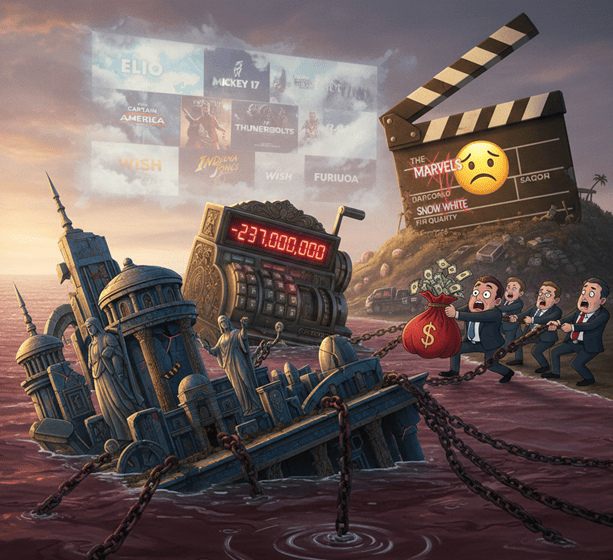
We can ask an operative question here: What happens when studios invest enormous sums based on projected quality, only to discover that audiences perceive value very differently than expected? The answer reveals something fundamental about the nature of quality itself.
Greenlighting Potential Quality
Let’s consider Hollywood’s production process. Movies are greenlit (meaning, officially approved for production) based on detailed financial projections. These projections included estimated box office performance, international sales, home video/streaming revenue, merchandising, and ancillary markets. Studios also run complex models. These models often involve marketing, distribution, and international teams. All of this is essentially done to predict quality, which, in this case, means forecast potential profitability.
A good example of a metric here is “cash-on-cash” returns over some period of time; say, five years. These projections factor in comparable films (“comps”), attached talent (stars/directors), script appeal, and various market trends (“romcom resurgence”; “superhero fatigue”; etc.). If projected returns exceed the studio’s required rate of return, which is typically fifteen to twenty percent internal rate of return (IRR), the studio commits financing and gives the green light. Yay!
Once greenlit, the bulk of the budget is spent during pre-production, principal photography, and post-production. This expenditure is well before the film generates a single dollar of revenue. Salaries for cast/crew, locations, sets, visual effects, equipment, and more are paid out during this phase. This phase typically spans one to two years or longer. Marketing ramps up closer to release, but a significant portion of that is also committed well upfront. By the time the movie is released, the studio has already committed eighty to ninety percent of the total production costs. By release day, the studio faces the culmination of sunk cost: the production investment is irrecoverable regardless of the film’s performance.
This sunk cost structure creates high stakes. If the film underperforms relative to projections, it can result in losses. Even films grossing hundreds of millions can lose money once studios account for marketing costs, theater/distributor splits, and what are called recoupment waterfalls.
Those “waterfalls” refer to the contractually obligated precise ordering of how incoming revenues get paid out and to whom; a form of quality that takes on an outsized importance.
Because studios can’t recoup sunk costs by pivoting mid-production, they are (at least for the most part) locked into their initial bet from the greenlight decision forward. In rare cases, studios cut their losses entirely, literally shelving a completed film and taking a total write-off for tax purposes. Warner Bros. did exactly this with Batgirl (2022), canceling the $90 million film despite it being fully shot and in post-production. The studio determined that releasing it would damage the DC brand more than absorbing the loss, so they wrote off the entire investment and never released it. In a similar move, Warner Bros. shelved Coyote vs. Acme after completion.
These decisions underscore just how locked-in studios are: sometimes the “least bad” option is to eat the entire sunk cost rather than risk further brand damage or marketing expenses on a film projected to bomb.
From a “quality” standpoint, the dynamic I just talked about is why studios increasingly rely on various things like franchises, intellectual property with a (presumed) built-in audience, or (allegedly) bankable stars. This is all done in order to reduce the financial risk. A challenge here is the potential quality drift that sets in when they keep going back to the well for more material. (This is a little different than the drift-to-discipline I talked about, but there are corollaries.)
Another factor worth considering is that we are largely in the era of the so-called “tentpole production.”
A “tentpole” in the film industry is a high-budget production, and thus hoped-for “blockbuster,” that is anticipated to bring in a very large sum of money and, at the same time, boost the bottom line of the studio or the production company. Ideally, both.
The crucial context here is that tentpole projections don’t just determine their own budgets. They can shape entire slates of interconnected projects. Let’s say I’m a studio that just bankrolled director James Gunn and betting that his studio project Superman will gross $800 million. That forecast may justify greenlighting a Justice Gang (er, I mean League) sequel, a Supergirl spinoff, or multi-film contracts with key talent. Here I, acting as the studio, am not just betting on Superman‘s profitability in isolation. No, I’m banking on Superman generating enough surplus revenue to fund franchise expansion.
Here’s my problem: if Superman merely meets projections, my studio breaks even on that initial bet. However, those ancillary projects depend on Superman doing more. They depend on the film exceeding expectations to provide the capital cushion for continued investment. What this means is that when a tentpole underperforms, it doesn’t just fail on its own terms. That failure collapses the financial foundation for an entire interconnected slate, forcing studios to cancel sequels, shelve spinoffs, or scale back franchise ambitions.
Examples Galore!
Hollywood has no shortage of films that were greenlit with optimistic projections, often based on franchise strength, star power, director pedigree, or appeal of the intellectual property. There is equally no shortage of films that massively underperformed upon release, leaving studios with huge losses after the money was already spent years earlier.
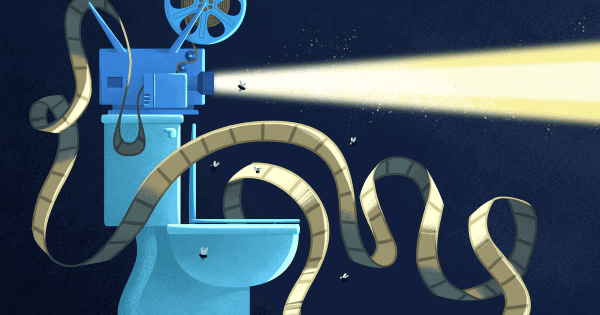
I pulled together some notable recent examples from the last few years, focusing on 2023–2025, illustrating exactly the high-stakes gamble I’m discussing here.
- The Marvels (2023, Disney/Marvel Studios). As a sequel to the billion-dollar Captain Marvel and a tie-in to popular Disney+ shows, it was projected to be another juggernaut in the Marvel Cinematic Universe. Budget: ~$270–275 million (plus heavy marketing). Worldwide gross: Just $206 million. One of the lowest in MCU history. Estimated loss: Over $237 million. Superhero fatigue and mixed marketing contributed to the disconnect. (Note: those are quality issues.)
- Snow White (2025, Disney). A live-action remake of the animated classic, with big stars (Rachel Zegler, Gal Gadot) and massive VFX/reshoots. Disney expected it to follow the success of earlier remakes like The Little Mermaid. Budget: Ballooned to ~$270 million+. It bombed spectacularly amid controversies, poor reviews, and, worst of all, total audience disinterest. One of the year’s biggest financial disasters for Disney.
- Elio (2025, Pixar/Disney). An original animated sci-fi adventure from Pixar, projected to rebound the studio after mixed results. Troubled production (director changes, rewrites) but still greenlit with high hopes for family audiences. Worst opening weekend in Pixar history (~$20 million domestic), failed to leg out, and became a “catastrophic” loss despite decent reviews.
- Mickey 17 (2025, Warner Bros.). Directed by Bong Joon-ho (fresh off his Oscar sweep for Parasite), starring Robert Pattinson (which apparently mattered to some people), projections were sky-high for a prestige sci-fi hit. Budget: ~$118 million. Grossed only ~$133 million worldwide. Marketing struggles and audience apathy turned it into a thud.
- Captain America: Brave New World (2025, Marvel/Disney). Introducing new characters and a high-profile star (Anthony Mackie taking the shield from Chris Evans), expected to kick off a strong MCU phase. Extensive reshoots drove up costs. Opened okay but quickly dropped off, grossing ~$415 million worldwide. This was well below expectations for a Captain America film, marking another superhero underperformer.
- Thunderbolts* (2025, Marvel/Disney). An anti-hero team-up with a stacked cast; projected as a fresh MCU entry. Grossed ~$382 million. Profitable on paper for some metrics but a big disappointment relative to franchise norms and pre-release hype, particularly as this was billed as “The New Avengers” and a direct tie-in to not only The Fantastic Four but Avengers: Doomsday.
- The Flash (2023, Warner Bros./DC). Budget ~$200-220M, grossed only ~$270M worldwide despite being called “one of the greatest superhero movies ever made” by the studio. Major loss, and, with it’s time travel mechanics utilizing the so-called “flashpoint,” it was supposed to reset the entire DCEU. Instead, it almost guaranteed its demise.
- Indiana Jones and the Dial of Destiny (2023, Disney). Budget ~$295M (plus marketing), grossed ~$384M. Projected to be a nostalgic hit with Harrison Ford’s final outing. Lost an estimated $100M+.
- Wish (2023, Disney). Disney’s 100th anniversary film, expected to be a huge celebration. Budget ~$200M, grossed only ~$255M. Major disappointment for what was supposed to be a milestone.
- Joker: Folie à Deux (2024, Warner Bros.) Sequel to a billion-dollar hit, but drastically underperformed expectations with its musical direction alienating audiences.
- Furiosa: A Mad Max Saga (2024, Warner Bros.) Prequel to the highly-acclaimed and quite successful Fury Road, it was expected to capitalize on that film’s acclaim. Budget ~$168M, grossed only ~$173M worldwide.
A pattern worth noting: Disney and Warner Bros. dominate this list of failures. This isn’t cherry-picking. It reveals something fundamental about how market leaders approach risk. These studios command the largest production budgets, the most valuable intellectual property portfolios, and the strongest distribution networks. They should have the best odds of success. Yet their very dominance creates institutional pressure to maximize every franchise, greenlight the safest bets, and chase the broadest possible audiences.
Think about it: when you’re managing billion-dollar properties like Marvel, DC, Star Wars, or Pixar, the stakes of not greenlighting the next installment feel existentially threatening. This is the case even when creative exhaustion or audience fatigue should be flashing red. Smaller studios can afford to take creative risks because they have less to lose; major studios paradoxically become more risk-averse as their portfolios grow, leading them to over-invest in “sure things” that turn out to be anything but.
I reiterate: the concentration of failures at the top isn’t coincidence. It’s the natural consequence of treating quality as something that can be engineered through scale, resources, and market research rather than recognizing it as the shifting, contextual perception it actually is.
These failures expose the critical weakness of the industry model: Studios commit hundreds of millions upfront based on forecasts (often using comps from past hits), spend it all during years of development, then face the reality on opening weekend, when it’s far too late to adjust course. When audiences don’t show up (due to fatigue, controversies, competition, or shifting tastes) the losses pile up quickly. With no way to recover sunk costs, studios become even more conservative in their greenlight decisions. Paradoxically, this risk-aversion creates a self-reinforcing cycle: studios retreat further into safe sequels and established IP, even as audience fatigue with those very properties drove many of these failures in the first place.
The Quality Perception Dilemma
So let’s consider the obvious here:
- It costs lots of money to make movies these days.
- Studios want to maximize their return on investment.
- To maximize return, you have to try for the broadest possible audience.
That kind of financial pressure creates a serious quality dilemma. To maximize return on a $200+ million investment, studios must pursue the broadest possible audience: not just existing fans of a genre, but casual viewers who might be persuaded to buy a ticket. This means targeting every demographic simultaneously: young and old, male and female, diverse cultural backgrounds and sensibilities. The goal is universal appeal.
But here’s the problem: quality is a shifting perception of value over time, and different audiences perceive value differently. What aligns with teenagers (fast pacing, social media-friendly moments, trending aesthetics) may alienate older viewers seeking depth or nostalgia. What appeals to one cultural context may feel tone-deaf in another. A film’s tonal choices (dark vs. light, sincere vs. ironic, challenging vs. comforting) will invariably connect with some demographics while repelling others. Studios are trying to thread an impossibly narrow needle: create something that offends no one, appeals to everyone, and still feels distinctive enough to justify the price of admission.
A lot of what I said here has generated talk around whether the idea of the so-called “modern audience” is a myth, at best, or a fallacy, at worst.
Keep in mind something I indicated earlier: production timelines stretch across years. This is time during which cultural tastes, social conversations, and audience expectations shift. A joke that felt fresh in pre-production may feel stale (or worse, controversial) by release. An aesthetic choice made in 2022 might look hopelessly dated in 2025. Studios are essentially making bets on future perceptions of quality based on present market research, locking in creative decisions long before they can gauge whether those choices will land.
The Lesson?
So what does Hollywood’s struggle teach us about quality? First, that quality cannot be separated from context: demographic, cultural, and temporal. Second, that the pressure to maximize return often pushes toward broad, safe choices that paradoxically diminish the very distinctiveness that creates lasting value. And third, that measuring quality in advance (whether through market research, test screenings, or financial projections) is fundamentally an exercise in forecasting human perception, which is notoriously difficult to predict and impossible to control.
In the second part of this series, I’ll examine how the gaming industry faces similar challenges, but with an even tighter feedback loop between production costs, audience expectations, and the shifting definition of quality. If Hollywood’s model is risky, gaming’s might be even more precarious.
